

two-state solution : ค้นหาหนังสือธรรมะ หน้า 43 / 53
หน้าหนังสือทั้งหมด

233
Thai Temples in Japan
Osaka
Wat Bhavana Osaka
DIMC of Osaka 4-6-27 Ohmiya, Asahi-ku, Osaka,
535-0002, Japan
Tel. +(81)-66-956-1400
Fax. +(81)-66-956-1401
Website : www.dimcip.org/osaka
E-mail : [email protected]
Nagan
This text provides information about two Thai temples located in Japan: Wat Bhavana in Osaka and Wat Thai in Nagano. Wat Bhavana Osaka is located at 4-6-27 Ohmiya, Asahi-ku, Osaka, and can be contacte

84
The image appears to be divided into two sections showing groups of Buddhist monks in different settings and formations, but there are no visible readable characters or text in either section of the i
34
Iran and Sunni Relations in the Middle East
Although Iran is a center around which Shi’i resentment could coalesce, two factors reduce the likelihood that the Tehran regime will encourage such a development. One is that Iran aspires to be the c
The complexities of Iran's relationship with Sunni states underscore the ongoing challenges in Middle Eastern diplomacy. Iran seeks to be a leader in the region, supporting not only Shiite factions bu
36
Dealing With the New Middle East
Dealing With the New Middle East
The Bush administration's attempt to shape a new Middle East has been a major factor in the emergence of the new and extremely problematic realities we have discussed
The Bush administration's policies have complicated the realities in the Middle East. A new approach is needed, prioritizing diplomacy and a clear understanding of U.S. limits in the region. Confronta
43
Reassessing U.S. Policy Toward Syria and Democracy in the Middle East
A new policy toward Syria also needs to recognize the country for what it is: a small country without massive ambitions or ideological crusades, trying to maintain some role in the region. The confron
This text discusses the need for a nuanced U.S. policy toward Syria, recognizing its limited ambitions while encouraging a shift away from its spoiler role in Lebanon and alignment with Iran. It furth
35
Exploring the Concept of Dhammakāya in Pali Canonical Texts
Of the three canonical passages mentioned above, only the first, namely the Aggañña-sutta passage, contains the term dhammakāya, while the other two do not. The reason for which all these passages are
This study reexamines the term dhammakāya in specific Pali canonical passages, notably the Aggañña-sutta, contrasting it with previous scholarly interpretations that often exclusively link the term to
37
Exploring the Concept of Dhammakāya in the Aggañña-sutta
IV. Reference 1: Dhammakāya as the Tathāgata’s Designation
The first Pali reference to the term dhammakāya that is well known to all previous works is a passage in the Aggañña-sutta, wherein the term
This text discusses the term 'dhammakāya' as referenced in the Aggañña-sutta, emphasizing its importance in defining an heir of dhamma and the Tathāgata’s true son. The conversation between the Buddha
48
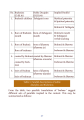
Brahmins and Noble Disciples: A Comparative Analysis
No. | Brahmins (D.III.81) | Noble Disciples (D.III.84) | Implied Parallel
---|------------------------|---------------------------|------------------------
1. | Brahma's children | Tathägata's sons |
The text presents a comparative analysis between Brahmins and Noble Disciples, highlighting their similarities in mythical and spiritual parental origins. It details how both are seen as offsprings of
49
The Tathāgata and Brahmā: A Semantic Analysis
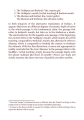
1. The Tathāgata and Brahmā,48 the creator god
2. The Tathāgata's mouth (verbal teaching) & Brahmā mouth.
3. The dhamma and Brahmā, the creator god; or
The dhamma and Brahman, the ultimate reality.
I
This passage delves into the nuanced relationships between the Tathāgata and Brahmā, highlighting the semantic layers present in verbal teachings. It contrasts the Tathāgata's mouth with Brahmā's, ind
52
Understanding the Noble Eightfold Path and Threefold Path in Buddhism
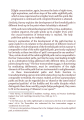
[Right concentration, again, becomes the basis of right views, right aspirations, and other steps of the noble eightfold path, which is now experienced on a higher level, and this spiral-like progress
This text elaborates on the interrelationship between Right Concentration, Right Views, and Right Aspirations as pivotal elements of the Noble Eightfold Path leading to liberation. It discusses the sp
57
The Concept of Dhamma and Kāya in Buddhist Philosophy
On the whole, it appears that the terms dhamma and brahma constituting four designations of the Tathāgāta are used in the sense of the ‘highest.’ It is most likely that they refer to Nibbāna.
This i
This study examines the terms dhamma and brahma, suggesting that they refer to the highest aspect of Tathāgāta, likely Nibbāna. The term dhamma denotes transcendental realities, transcending the realm
61
Exploring the Concept of Dhammakaya
First, as a *kammadhāra* compound, the translation of the term *dhammākāya* will be ‘the body that is transcendental (lokuttara) dhamma’ or ‘the body that is Nibbāna.’ This gives a similar sense as th
The term Dhammakaya can be viewed in two ways: as a kammadhāra compound translated to mean 'the body that is transcendental dhamma' or as a tappurisa compound meaning 'body pertaining to transcendenta
63
Understanding Paccekabuddhas in Buddhist Philosophy
V. Reference 2: Dhammakāya and Paccekabuddhas
A Paccekabuddha is counted as one of the two types of Buddhas. According to Buddhist philosophy, a Paccekabuddha is a person who is of the highest wisdom
This text discusses the concept of Paccekabuddhas, individuals of high wisdom who achieve self-enlightenment but lack the ability to teach. It explores scholarly arguments about the pre-Buddhist origi
66
Understanding Paccekabuddhas: Characteristics and Dhamma
These verses describe the Paccekabuddhas as ones possessed of supreme purity, wisdom, wakefulness, composure, and having the ability for seeing and knowing. In other words, they are full of realizing
These verses highlight the qualities of Paccekabuddhas, emphasizing their supreme purity, wisdom, and self-enlightenment capacity. The term ‘mahatadhamma’ refers to the great dhammas that relate to th
78
Understanding Dhammakāya in Early Theravādin Context
The research approach employed in the present study is intended as a more direct, analytical and inclusive one than previous approaches to this question. It is more direct in that it set off by docume
This study analyzes the term dhammakāya through close readings of Pali canonical passages, revealing that it relates not only to the Buddha but also to other noble figures like Paccakabuddhas and disc
90
Buddhist Manuscripts from Sipsong Panna Region
Buddhist manuscripts from the Sipsong Panna region can be divided into four categories. The first category consists of the Dai Pāli Tripiṭaka and Tripiṭaka commentary (三藏琢) which is represented by fiv
Buddhist manuscripts from the Sipsong Panna region are categorized into four main groups: the Dai Pāli Tripiṭaka and Tripiṭaka commentary, frequently used Pāli Canon texts, Theravāda Buddhist literatu
91
Exploration of Theravāda Buddhist Manuscripts in Sipsong Panna
literature.9 It is notable that the Agama Sutras (阿含经) discovered in the Xishuangbanna region are incomplete. For example, the Hinayana Agama should have contained the Khuddaka Patha (小品), Dharma-phra
The Agama Sutras found in the Xishuangbanna region are notable for their incompleteness. The Hinayana Agama is expected to contain various texts that are partly missing. According to The Complete Coll
94
Buddhist Manuscript Formats in Dai Region
Volume 98 Khuddaka-nikāya (小阿含经) and Volume 99 Majjhima-nikāya (中阿含经) are all in 5-line to 6-line format manuscripts; Volume 100 Digha-nikāya (长阿含经) is in 4-line to 5-line-format. The jäṭaka Wexiandal
Volume 98 Khuddaka-nikāya and Volume 99 Majjhima-nikāya are primarily in 5-6 line formats, while Volume 100 Digha-nikāya is formatted with 4-5 lines per page. The jäṭaka Wexiandala represents a key Bu
109
ความฉลาดในการรู้จักประโยชน์อย่างมีเหตุผลสู่การหลุดพ้นสูงสุด
พรเจ้าอุตตตริวิมาขัจิรมาณำณำพาวารกนา ดวยน: the wisdom of recognizing expedient toward the ultimate liberation is the two sublime ears of the Lord.
โลภิคยาลุกฺตรํณํImagine the figure of recognition the
บทความนี้พูดถึงความฉลาดในการรู้จักประโยชน์ไปสู่การหลุดพ้นสูงสุด โดยเปรียบเทียบองค์ประกอบต่างๆ ของความฉลาดในพระพุทธศาสนากับคุณลักษณะของพระเจ้าที่มีการเปรียบเทียบกับริมฝีปาก ดั้งฟัน และลิ้น ซึ่งแสดงถึงค
126
An Shigao's Influence on Anban Sutras
From Sengyou’s CSZJJ, we learn that there are two Anban[shouyi] jing sutras which were translated by An Shigao:37
安般守意經一卷 安錄云:『小安般經』。(CSZJJ p.5c 23: “corresponding to a Smaller Anban jing”
大安般經一卷(CSZJ
This content examines An Shigao's translations of Anban sutras, highlighting the distinctions between the Present Da Anban shouyi jing and the Kongo-ji Anban shouyi jing. The text discusses the integr